
Art historian Kathleen Kuiper observed the transition from Modernism to Postmodernism, noting: “In the 1950s and ’60s, there were discernible shifts in all the arts: writers turned to irony and self-awareness; visual artists focused on the process rather than the finished product. This period marked the end of Modernism and the rise of a more fragmented, pluralistic approach to art”
The artistic evolution within the United States from the mid-20th century to the present day encapsulates profound shifts in societal consciousness and technological advancements, mirroring broader cultural transformations. This exploration aims to provide a nuanced analysis of key movements and figures that have shaped the contemporary American art scene, elucidating their contributions and the broader implications for the art world.
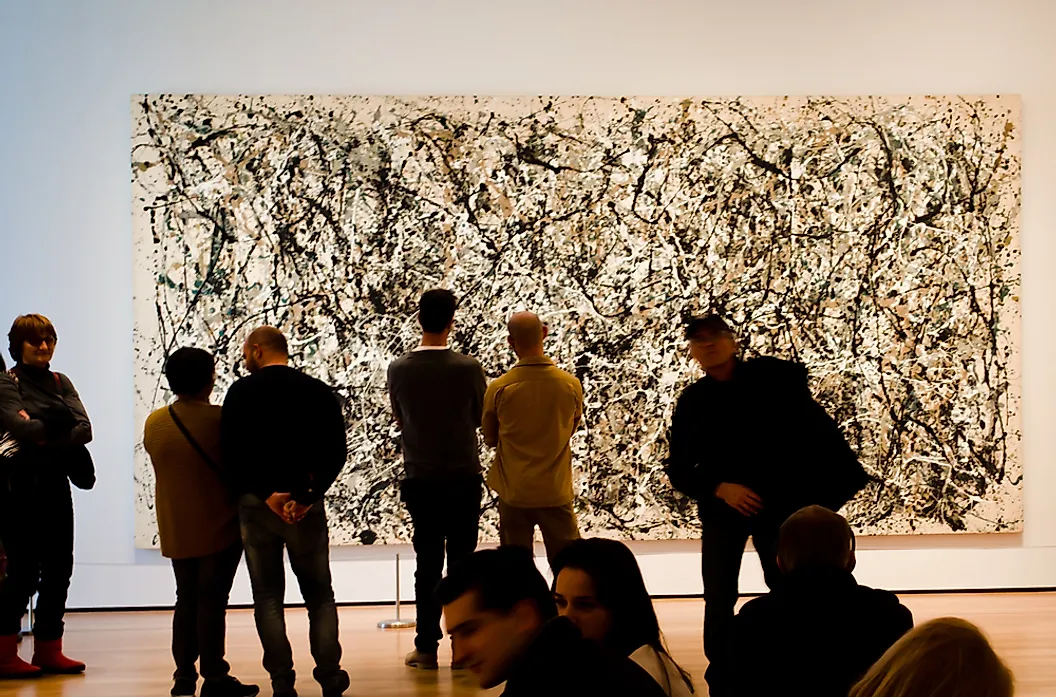
In the mid-1900s, the dominance of Abstract Expressionism signified a radical departure from traditional forms of representation. This movement, characterized by the visceral and gestural techniques of artists such as Jackson Pollock, sought to liberate the canvas from conventional constraints. Pollock’s “No. 5, 1948” epitomizes this paradigm shift, where the artist’s physical interaction with the canvas created a dynamic, almost chaotic energy that redefined artistic expression. Concurrently, the Pop Art movement, with figures like Andy Warhol and Roy Lichtenstein, interrogated the intersections of high art and popular culture. Warhol’s “Campbell’s Soup Cans” and Lichtenstein’s comic-strip-inspired works critiqued the pervasive influence of consumerism and media saturation in American society.
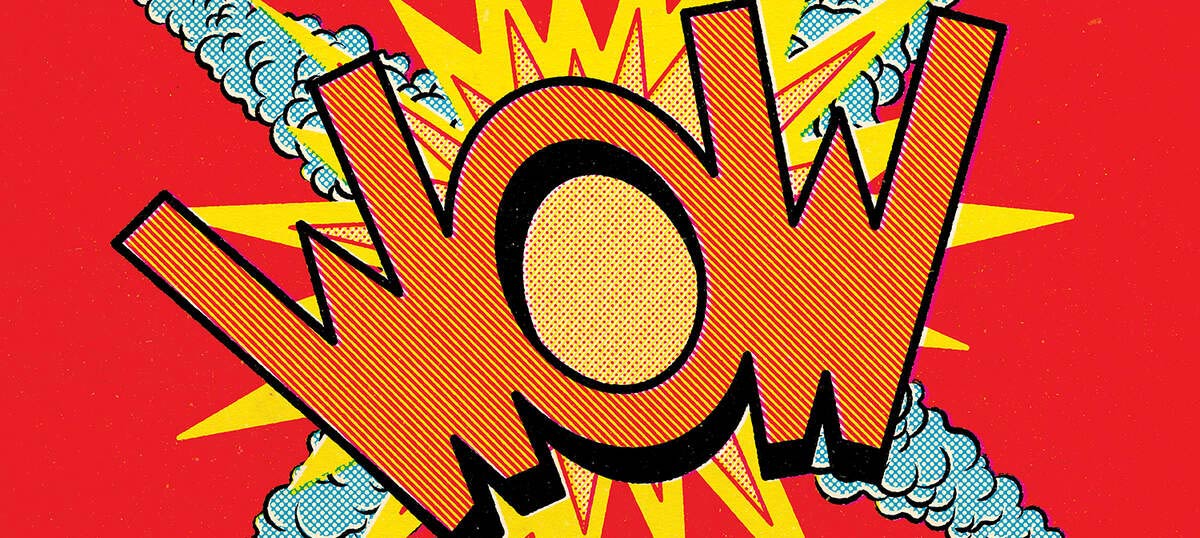
The latter half of the 20th century witnessed a pivot towards conceptual and performance art, underpinned by postmodernist thought and a desire to challenge established artistic hierarchies. Artists such as Vito Acconci and Chris Burden exemplified this shift through their provocative and often controversial works. Acconci’s “Seedbed” (1972) transformed the artist’s body into a site of both personal and public exploration, while Burden’s “Shoot” (1971) pushed the boundaries of physical and psychological endurance, questioning the limits of artistic practice.

Entering the 21st century, the integration of digital media and technology catalyzed new forms of artistic expression. Pioneers like Cory Arcangel and Rafaël Rozendaal harnessed these tools to create immersive and interactive experiences. Arcangel’s “Super Mario Clouds” (2002), a hacked version of a video game, invites viewers to contemplate the nature of digital aesthetics and our relationship with technology. Rozendaal’s internet-based works further expanded the possibilities of art, transcending traditional mediums to engage audiences in novel and participatory ways.
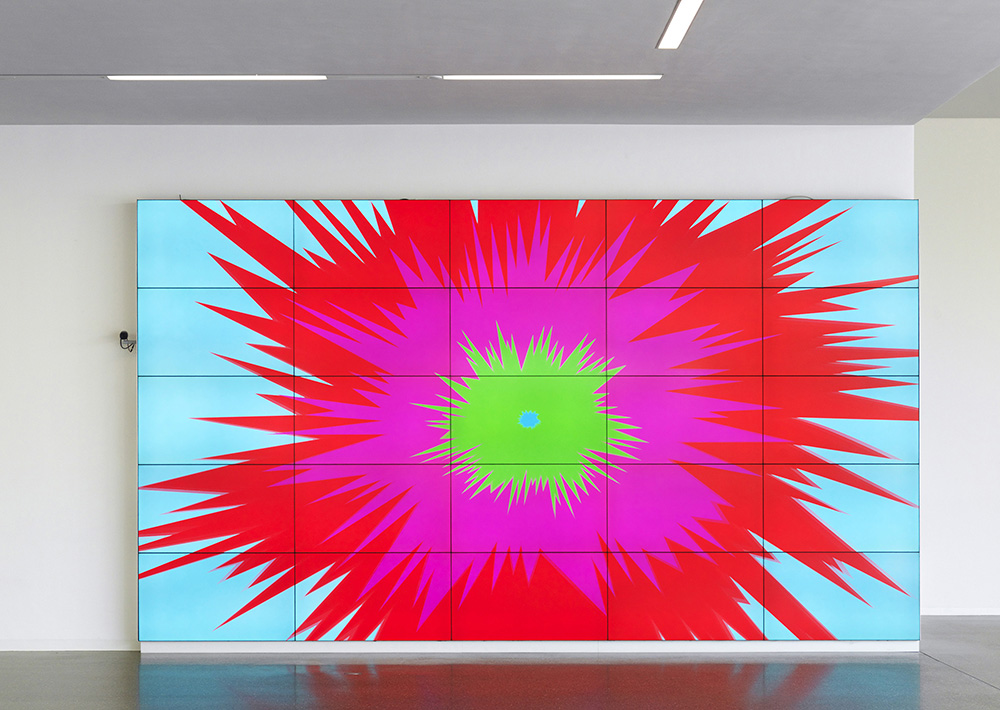
Simultaneously, a resurgence in socially engaged art practices emerged, reflecting a heightened awareness of political and social issues. Tania Bruguera’s long-term project “Immigrant Movement International” aims to raise awareness about the political situation of immigrants and explore definitions of citizenship and belonging. Her performances and installations, which have been exhibited at venues such as the Queens Museum and Tate Modern, highlight the plights and contributions of immigrants. Similarly, Ai Weiwei’s numerous works confront human rights issues and criticize the Chinese government, with installations like “Sunflower Seeds” at the Tate Modern, composed of millions of porcelain seeds crafted by skilled artisans, symbolizing individuality and collective strength.

The collective Guerrilla Girls has gained renown for its anonymous activist art addressing sexism and racism in the art world. Their provocative billboards, performances, and publications have sparked crucial conversations about equity in the arts. Additionally, Zanele Muholi’s powerful photography series “Faces and Phases” documents and celebrates black lesbian and transgender individuals in South Africa, providing visibility to a marginalized community.
The contemporary art landscape is increasingly characterized by a commitment to diversity and inclusion, with artists from historically underrepresented groups gaining prominence. Kehinde Wiley (my personal favorite) and Amy Sherald’s portraits challenge traditional iconographies and power dynamics, offering a reimagined narrative within the canon of Western art history. Wiley’s “Napoleon Leading the Army Over the Alps” (2005) reinterprets a classical work by Jacques-Louis David, positioning a young African American man as the central figure, thereby subverting historical narratives and asserting the agency of marginalized individuals.
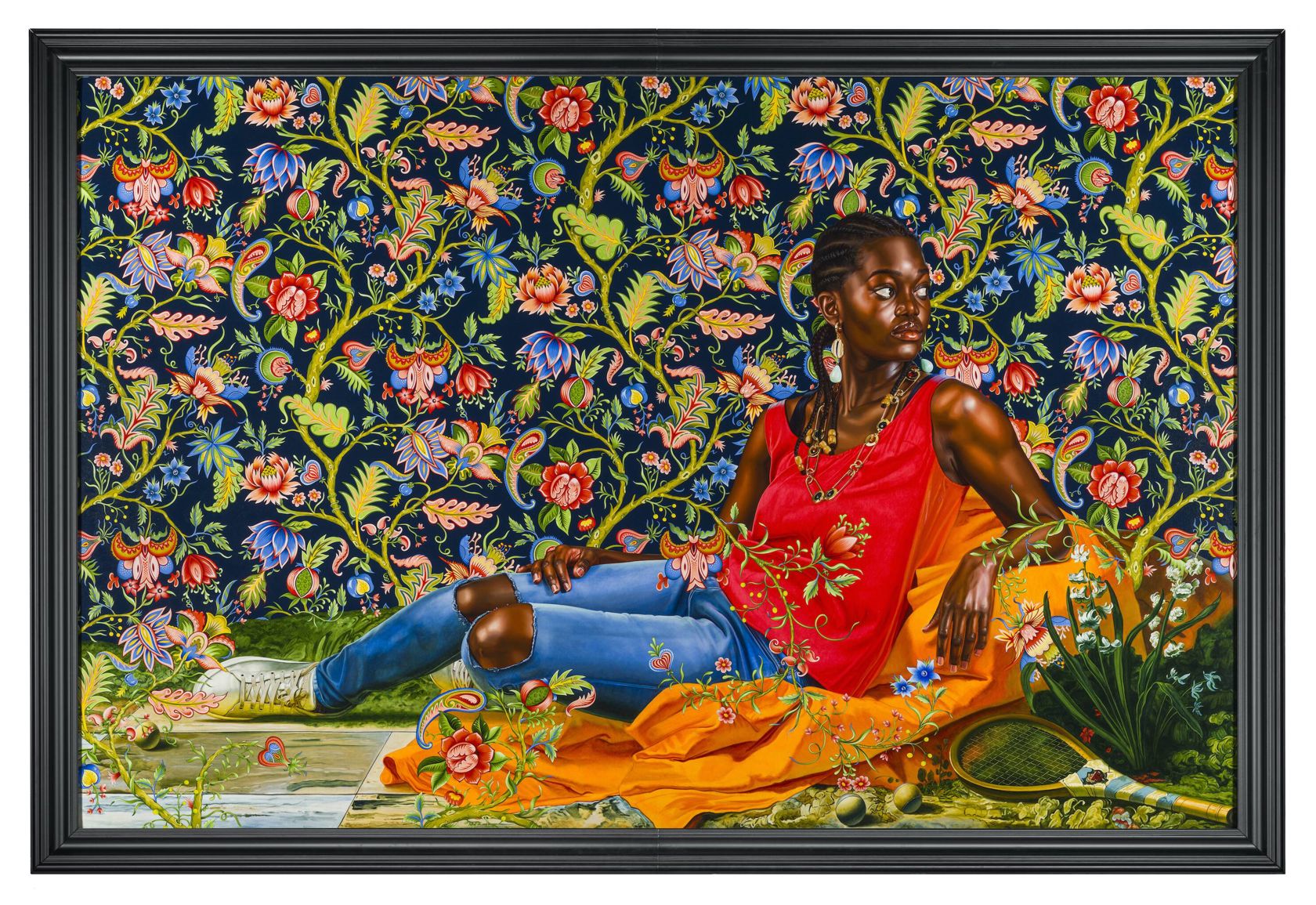
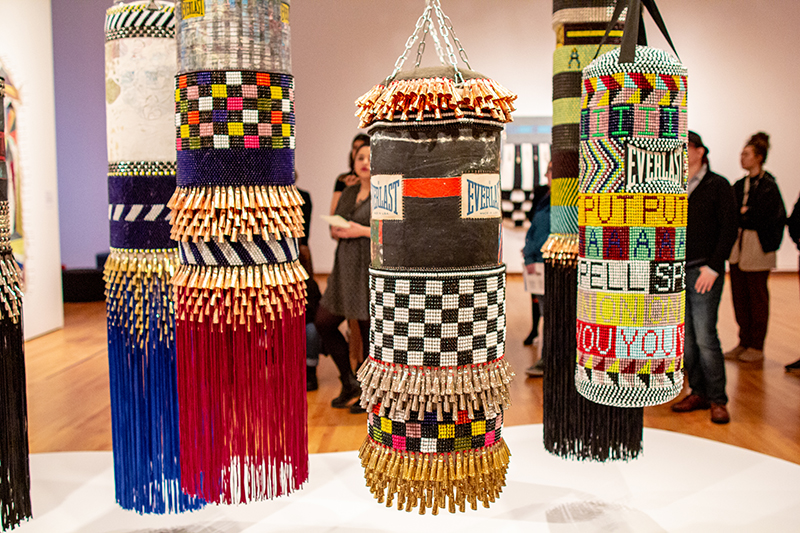
Mickalene Thomas’ vibrant portraits, such as “Le Déjeuner sur l’Herbe: Les Trois Femmes Noires” (2010), reimagine iconic works of art with black women as the subjects, challenging traditional representations of beauty and power. Jeffrey Gibson’s multidisciplinary works blend elements of his Choctaw and Cherokee heritage with contemporary art practices, celebrating indigenous cultures and LGBTQ+ identities. Ebony G. Patterson’s immersive, mixed-media installations like “…while the dew is still on the roses…” (2018), explore gender, race, and violence through vibrant colors and elaborate patterns inspired by her Jamaican-American background.
The legacy of the collective Chicanx artists Xico González, Harry Gamboa Jr., and others associated with the “Asco” movement in the 1970s cannot be overlooked. They used performance, public interventions, and multimedia to confront issues of racism, marginalization, and cultural identity in Los Angeles, contributing to a critical dialogue on representation and social justice.
Looking ahead, the art world continues to evolve, integrating new technologies and addressing pressing social issues. The boundaries between art and life, physical and digital, continue to blur, prompting a redefinition of what constitutes art and its impact on collective consciousness.
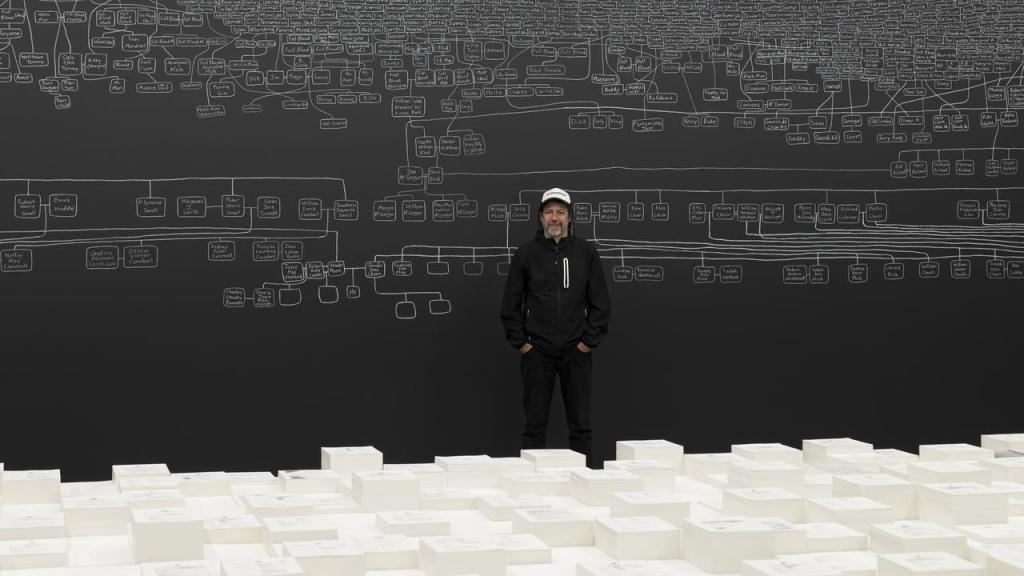
Alexandra Munroe, Senior Curator at Large at the Solomon R. Guggenheim Museum, highlighted the significant trends in contemporary art: “The theme for 2023 was, ‘How can we imagine and produce a way to exist amidst the obsolescence and fracturing of everything we thought we knew, including the certainty of earth’s survival?’… This will continue in 2024, for example in Venice, where ‘the United Republic of Tanzania will have its first national pavilion, First Nation artist Archie Moore will represent Australia, and Jeffrey Gibson… will take over the U.S. pavilion, the first for an Indigenous American artist’” And indeed his inclusion was met with admiration and critical appreciation. In fact, he won the top prize of the Venice Biennale. Onward, artists!
This article was created with the assistance of AI
Citations:
[1] https://www.open.edu/openlearn/history-the-arts/art-and-visual-culture-medieval-modern/content-section—references
[2] https://www.artsy.net/gene/references-to-art-history
[3] http://arthistoryteachingresources.org/lessons/modern-art-1900-50/
[4] https://www.theartstory.org/definition/american-art/
[5] https://guides.uflib.ufl.edu/c.php?g=147453&p=2808061
[6] https://www.tate.org.uk/art/art-terms/s/socially-engaged-practice
[7] https://www.reddit.com/r/ContemporaryArt/comments/hrevbl/communitybased_art_social_practice/
[8] https://www.pbslearningmedia.org/resource/c7b5affb-128d-42e4-afd0-b08c09e591db/reframed-artists-seeking-social-change-bring-the-public-into-the-picture/
[9] https://artway.eu/artway.php?action=show&id=786&lang=en
[10] https://artsandplanning.mapc.org/socially-engaged-art/
 aletheus; a compendium