Tucked away in the fertile hills of central Europe lies the quiet village of Soisdorf, whose storied past stretches back over a millennium. Though today home to just over a thousand souls, Soisdorf’s strategic location ensured its involvement in many of the great events and upheavals that have shaped the history of this region. From obscure beginnings in the Early Middle Ages to the massive changes wrought by revolution, war, and industrialization, the story of this humble village provides a fascinating window into the wider currents of European history.

The church at Kirchgasse is a protected cultural monument .
Soisdorf is a district of the municipality of Eiterfeld in the district of Fulda in Hesse, Germany. It is located in a hilly area that is part of the Fulda-Werra-Bergland. The landscape is characterized by forests, meadows and fields. The village is located about 5 kilometers (3 miles) southeast of Eiterfeld and about 20 km. (12 mi.) south of Fulda. The nearest larger cities are Bad Hersfeld, 25 km. east, and Kassel 70 km. north. Frankfurt is located approximately 120 km. to the southwest. Notably, Soisdorf lies just under 30 km. (20 mi.) from the Hesse-Thuringia border.

The first whispers of Soisdorf emerge from the mists of the 10th century, when in 981 Count Gozbert of Luxembourg donated a farm in “Suzendorp” to the powerful Archbishopric of Trier. This tantalizing clue reveals Soisdorf was already an established settlement by that time, though precisely when or by whom it was founded remains uncertain. For centuries it remained part of the Archbishopric’s domain, a small cog in the vast machine of feudalism that dominated Medieval Europe.
By the 14th century Soisdorf belonged to the Duchy of Luxembourg and found itself directly in the path of history. As part of the Upper Germanic Limes, it stood on the frontiers of Luxembourg where the great fortress walls of the Roman Empire once marked the boundary between civilization and barbarism. Though the Legions had long since departed, echoes of their world could still be felt in the very stones of Soisdorf. The mighty parish church of St. Stephanus, for instance, built in the 11th century in the Romanesque style before later Gothic extensions.
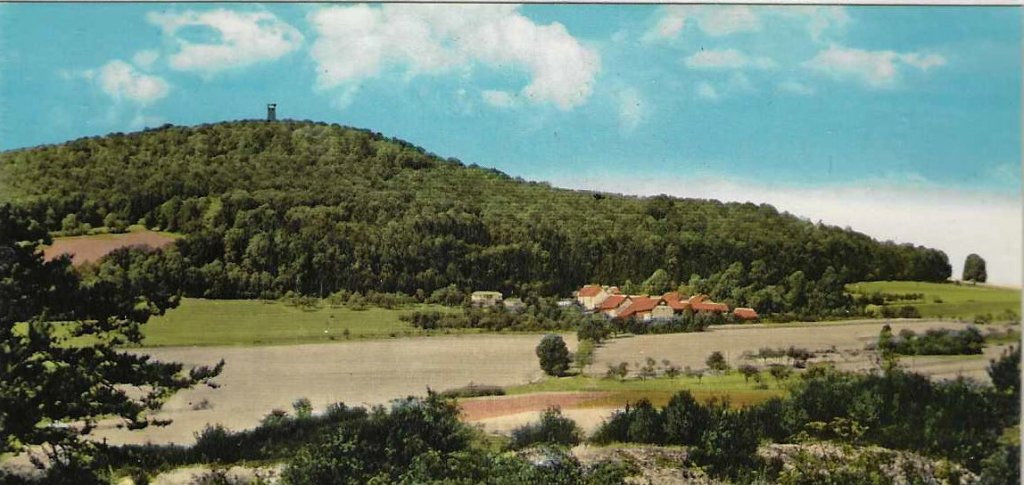
But the Duchy’s rule over Soisdorf ended abruptly in 1370 when it was acquired by the Archbishops of Trier and became part of the sprawling Electorate of Trier. This transfer of power was but one small scene in the great drama of alliances, intrigue, and warring fiefdoms that dominated the Late Middle Ages. For the peasant farmers of Soisdorf, however, the impact was doubtless less abstract. As new masters took control, the rhythms of life – the harvests, festivals, births, and deaths – carried on regardless.
The early modern period saw tumultuous change sweep over Soisdorf. As religious divisions fragmented Europe, the local lord introduced the Reformation in the mid-1500s, and the village became predominantly Protestant. But any sense of stability was shattered by the destructive maelstrom of the Thirty Years’ War in the 17th century. Soisdorf suffered horrifically as armies plundered crops and goods, bringing conflict, famine, and plague. By some accounts over half the population perished.
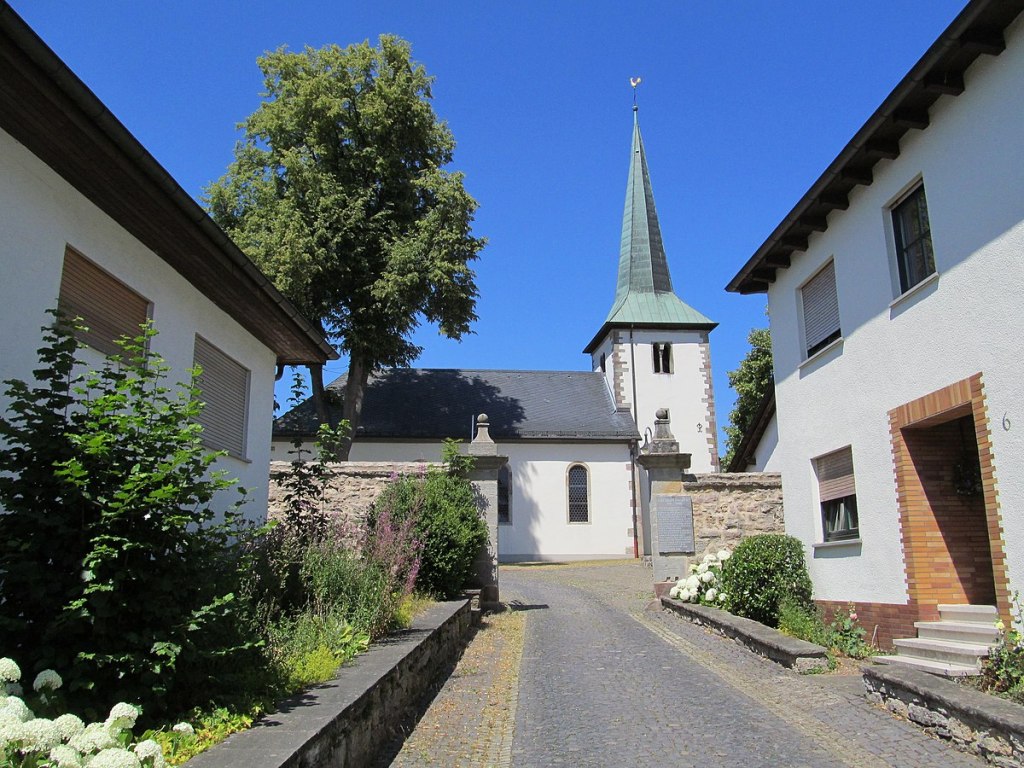
Just as Soisdorf regained its strength, it was thrust into turmoil once more as French revolutionary troops marched in and occupied the region in the late 18th century. The old feudal ties that had long-bound the peasantry were severed overnight as radical new ideas took hold. Although now part of the French Republic, the daily rhythms of rural life remained much the same in Soisdorf – but ferment was in the air.
The 19th century opened with Soisdorf annexed by Prussia after the bloody Napoleonic Wars, becoming part of the Rhine Province in 1815. Though still a predominantly agricultural village, the wider forces of modernity were transforming the world around it. The old Romanesque church was renovated and expanded in the neo-Gothic style, reflecting the Romantic enthusiasm for the Middle Ages. And in 1841 the railway sliced through the countryside nearby, connecting Soisdorf to the thriving industrial cities of the Rhineland.

At this time Soisdorf had a population of about 600 people and was mainly characterized by agriculture and trade. There were some small factories and mills in the village. After World War I, Germany had to cede parts of its territory to the victorious powers due to the Treaty of Versailles. Thus, part of the district of Euskirchen, to which Soisdorf belonged, also fell to Belgium.
During the Second World War, Soisdorf suffered heavy damage from bombing raids. After the war, the village was rebuilt and experienced an economic boom in the 1950s. Today, Soisdorf is a municipality with about 1,000 inhabitants and belongs to the district of Euskirchen in North Rhine-Westphalia.

Resources:
Website of Municipality of Soisdorf: https://www.soisdorf.de/
Historical Society Soisdorf: https://www.geschichtsverein-soisdorf.de/
State Archives of North Rhine-Westphalia: https://www.archive.nrw.de/
Chronicle of the municipality of Soisdorf, published by the municipal council (2005).
M. Majerus: History of the villages and spots of Luxembourg, vol. 5 (1998)
P. Margue: Soisdorf – Highlights from the History of a Moselle Village (1979)
State Archives of Luxembourg: https://anlux.lu.ch/Portal/De/recherche.aspx
Regional history association “Frënn vum Duerf”: http://www.duerfabservatory.lu
Heimat- und Geschichtsverein Soisdorf
http://www.geschichtsverein.org/index.php/beitraege-verwalten/21-archiv-soisdorf/63-starke-heimat
Institut grand-ducal, History Section – Luxembourg National Institute for Historical Research
Musée d’Histoire et du Vin de la Moselle Luxembourgeoise
 aletheus; a compendium
I value your thoughts and opinions; please share them here.