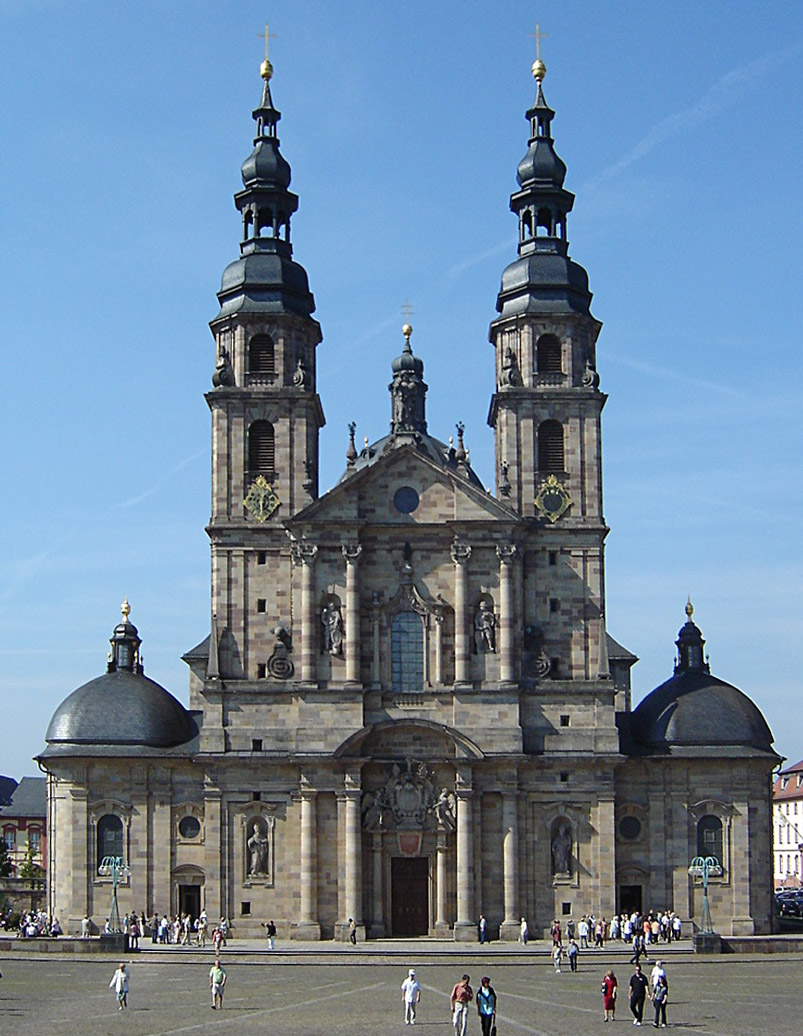
Summary: This article paints a detailed picture of life in Lower Franconian villages during Fulda’s rule from 1745 to 1845. It examines how religious control, taxation, and shifting agricultural practices shaped community structures and daily life. The piece connects historical governance with the enduring social dynamics of these rural villages, offering a compelling look at how these small communities navigated power, resilience, and change across a century of upheaval
The villages of Oberleichtersbach, Reckrod, Modlos, and Soisdorf in western Lower Franconia were part of the Ammänter (districts) of Bieberstein, Salzschlirf, and Neuhof within the Prince-Bishopric of Fulda during the period of 1745 to 1845. As an ecclesiastical principality, Fulda’s territories were governed by the Fürstbischöfe (Prince-Bishops) who owed secular allegiance to the Holy Roman Empire.
According to tax records from 1597, Oberleichtersbach contained merely 23 households, indicating a small peasant population. Modlos was even tinier, numbering only around 15 houses in the late 18th century. Reckrod and Soisdorf were somewhat larger villages – Reckrod had approximately 250 residents in 1802, while a 1615 census counted 66 households (likely over 300 people) in Soisdorf.
The economic base was overwhelmingly agricultural. The vast majority were subsistence farmers or agricultural labourers bound by feudal obligations to the local Franconian nobility and by Fulda’s prince-bishops. Hauptgüter manorial records detail the predominance of cultivating grains like rye and barley, supplemented by kitchen gardens and orchards. Livestock such as cattle, pigs, and sheep were also commonly kept.
A few artisanal trades like blacksmithing, weaving, and shoemaking existed – particularly in Soisdorf which garnered income from its location on well-traveled trade routes. But overall, economic activity centered on peasant farming and extracting feudal dues from the local populace.
Social stratification followed the rigidly hierarchical feudal model. At the top were the prince-bishops and lesser nobility who held lands and privileges. Next were urban burghers and merchants, though none of these villages had a substantial middle class. The overwhelming majority were leibeigenen – feudal serfs bonded to farmlands belonging to their aristocratic lords with very limited freedoms.
Religious life revolved around the Catholic parish churches that the prince-bishops compelled all to attend. Ecclesiastical records indicate Oberleichtersbach fell under its own parish, Modlos that of Oberleichtersbach, Reckrod the parish of Kaltenborn, and Soisdorf had its own church of St. Michael. Education was rudimentary – some children from non-serf families potentially learned basic literacy from the church.
This isolated, tradition-bound existence began unraveling in the tumult of the Napoleonic Wars and the Secularization decrees of 1802-1806. French troops twice demanded quartering and provisions from villages like Soisdorf. A cholera outbreak in 1813 decimated populations already strained by the warfare.
As the Prince-Bishopric was dissolved and its lands absorbed into the Principality of Frankfurt, Grand Duchy of Frankfurt, and eventually the Kingdom of Bavaria in 1816 – long-held feudal systems began dissolving through a series of reforms and edicts. However, the transition was gradual, with liturgical patterns often continuing unchanged for decades.
While no longer under a ruling prince, Catholicism’s imprint remained culturally embedded in daily rituals and the annual cyclical patterns of these Lower Franconian villages well into the 19th century.
Environmental factors played a significant role in agrarian existence. Situated in the rural hinterlands west of the Rhön mountains, communities faced the vagaries of a continental climate. Firsthand accounts and parish records document years of inclement weather, including the particularly harsh winter of 1785 and severe flooding in 1788 that damaged harvests.
Military conflict regularly disrupted village life beyond just the Napoleonic campaigns. The Thirty Years’ War (1618-1648) brought repeated plundering and violence as Protestant and Catholic armies traversed the region. Demographic records indicate Oberleichtersbach’s population plummeted from 170 inhabitants in 1612 to just 95 by 1638 due to the war’s devastation.
Even in peacetime, an undercurrent of banditry and lawlessness persisted, as evidenced by a 1723 decree from Fulda’s prince-bishop establishing mounted pastoral guards to patrol forests and roads around villages like Soisdorf. Meanwhile, famine stalked the area multiple times – most severely in 1771-1772 when crop failures sparked food riots.
While certainly not extravagant, social dynamics afforded certain villages modest advantages over others. Soisdorf’s location allowed more economic interaction and a larger populace. Conversely, the bucolic hamlets like Modlos remained extremely insular.
Traditional power structures faced upheaval alongside political reorganizations. As reforms dissolved remaining feudal obligations by the 1830s-1840s, landed aristocrats gradually sold estates. The 1848 Revolutions accelerated peasants’ rights, altering centuries of deference to patriarchal village hierarchies.
Despite these societal convulsions, daily peasant life outwardly transformed relatively slowly. Farming practices and crop rotations changed little over generations. The liturgical calendar continued regulating secular and religious rituals like planting, harvesting, holy days, and festivals…
Here are additional details expanding on the feudal society and power structures in the Lower Franconian villages under Fulda’s rule from 1745-1845:
Feudal Obligations and Dues
Based on manorial records, peasants in these communities owed a variety of obligatory payments and labor services to the Fulda nobility who controlled the land. Common dues included:
- Zehnt – Tithes of one-tenth of agrarian production like grains, wine, livestock
- Geld-Renten – Cash quit-rents paid annually per household
- Frondienst – Compulsory labor services on nobles’ demesnes for days/weeks yearly
- Handlohn – Fees owed for use of banned mills, wineries, bakeries
- Death taxes upon inheritance transfers
Detailed 1594 tax registers for Oberleichtersbach list precise obligations like 4 yearly Frondienst, 7 bushels of rye/oats Geld-Renten, and cloth/linen tithes.

Landholding Patterns
Most peasants in Soisdorf, Reckrod and surrounding areas possessed tiny subsistence plots of 5-12 acres subjected to complex Flurzwang open-field farming systems. A handful of prosperous Ganz-Bauern existed with 30+ acre holdings worked by hired labor.
Beneath the peasants was a permanently landless class of Hausler/Insten forced into day labor, spinning, or domestic service. At the top, court records show a few aristocratic families like the von Hutten controlled massive estates through primogeniture inheritance.
Village Hierarchies
A robust patriarchal hierarchy governed these corporate village communities. At the top were the landed elite like nobles and clergy. Then came the prosperous Bauern peasants who dominated village assemblies and selected parish officials.
Lower status groups included craftsmen, widows, day laborers and the landless. Women legally remained subordinate with very limited rights outside the home. The communities rigidly enforced this order through public shaming, corporal punishment and exclusionary measures.
Legal Codes and Justice
As subjects of Fulda’s ecclesiastical princedom, the Willkuren legal codices issued by the Bishopric’s rulers held sway. These covered everything from inheritance and marriage laws to moral proscriptions on activities like gambling or concubinage.
At the village level, local priesterliche Gerichte (ecclesiastical courts) operated by church officials meted out punishments based on the Willikuren – Usually fines, public penances, floggings or stockade sentences for infractions.
More serious criminal cases eventually made their way to the Bishopric’s central chanceries in Fulda itself. The threat of incarceration in notorious Zuchthäuser prisons loomed for those deemed egregious offenders against societal norms.
So in summary, the feudal order remained deeply entrenched legally, economically and socially in these communities well into the modern period. The power structures were inherently patriarchal, reinforced by draconian hierarchies and aimed at extracting maximum obligations from the dependent peasantry.
Here are additional details expanding on the ecclesiastical influences and the role of the Catholic Church in the Lower Franconian villages under Fulda from 1745-1845:
Prince-Bishops’ Involvement
As both secular and spiritual rulers, the Fürstbischöfe of Fulda maintained tight control over parish life. All clergy appointments required their approval. Visitationsberichte (visitation records) show bishops making periodic tours to inspect churches and ensure adherence to doctrine.
In 1788, Bishop Heinrich VIII issued a new Ritual requiring standardized liturgical practices and record-keeping by priests. This allowed Fulda to closely monitor baptisms, marriages, burials and religious instruction across their lands.

Response to Protestantism
Despite its prominence elsewhere, the Protestant Reformation gained virtually no rural foothold in these deeply Catholic villages. Surviving ecclesiatical court records from 1532-1631 document only a handful of incidents involving “Lutheran” beliefs or practices.
The most severe occurred in 1597, when a citizen of Oberleichtersbach was publicly flogged and exiled for critiquing transubstantiation and Marian doctrines. Prince-Bishop Balthasar’s concurrent decrees reasserted the primacy of Catholic rites.
Education and Literacy
Levels of formal education were minimal outside of basic catechism and prayers taught by parish priests and Volksschullehrer (village schoolmasters). A few noble or prosperous Bauer families could afford private tuition in reading, writing and arithmetic.
Visitation reports estimate only 5-10% of adult peasants were basically literate even by the early 1800s. Women’s literacy rates were virtually non-existent, rarely exceeding 1-2%. The overwhelming majority of the populace remained illiterate dependents on oral traditions.
Folk Customs and Superstitions
While enforcing orthodoxy, the Church also theatrically incorporated existing pagan customs and beliefs surrounding the annual liturgical calendar. Remnants of solstice and equinox rituals merged with holy days like Christmas, Easter and harvest celebrations.
Folklore and magical thinking pervaded daily peasant life. From rituals surrounding birth, marriages and deaths to agricultural practices like burying cow pelvises under thresholds – pre-Christian folk superstitions remained ubiquitous beneath a Christian veneer.
The ecclesiastical strategy prioritized preserving core doctrinal adherence over fully extinguishing “heathen” folk customs deemed relatively benign. This allowed a syncretic blending of Catholicism with long-held peasant magical beliefs and practices.
Here are additional details on the environmental context and its impacts for the Lower Franconian villages under Fulda from 1745-1845:
Village Microclimates
The towns were situated in the Rhön foothill region, featuring a continental climate with warm summers and cold, snowy winters (just like where their descendents moved to). Reckrod and Oberleichtersbach’s at higher elevations made them slightly cooler and wetter.
Soisdorf at 600 ft sits on drier, more loess-enriched soils well-suited for grains and viniculture. Modlos’ valley location made it damper and better for hay meadows. Microvariations affected planting schedules, crop mixes, and yields.
Water Access
Proximity to the Fulda and Lützer rivers gave villages like Oberleichtersbach and Soisdorf advantages for water-powered mills, fishing, and irrigation. Wells and streams were vital for livestock and brewing.
The abundant forests provided timber for construction, heating, potash fertilizer, and foraging fruits/mushrooms. Common grazing meadows and fallow fields supplemented pig/cattle feed.
Environmental Disruptions
Years of poor harvests frequently led to food supply crises. The eruption of Indonesia’s Mount Tambora in 1815 kicked off the “Year Without A Summer” of extreme cold that decimated crops across Europe.
Livestock diseases like rinderpest could wipe out entire herds as evidenced by an 1774 epidemic. Meanwhile, flooding caused immense damage in 1682, 1730, and 1771 according to village chronicles.
Building Techniques
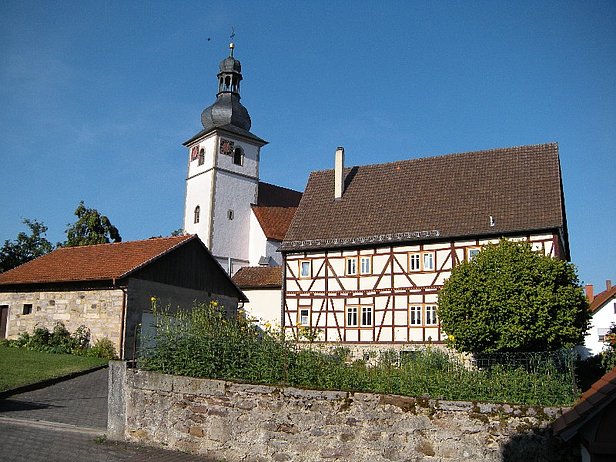
Most peasant houses were compact Fachewerkhäuser – timber-framed constructions with wattle/daub and thatch that optimized heat retention. Muddy village streets earned mention by travelers for their squalor in wet seasons.
Grander residences used exposed half-timbering, while ecclesiastical buildings like Soisdorf’s St. Michael’s Church featured stone masonry. But turf/thatch roofing remained ubiquitous to draw on locally abundant meadow resources.

Agricultural Productivity
Crop yields remained very low, estimated at only 3-5 bushels per acre for rye and wheat using medieval nutrient-depleting field systems. The required fallow periods meant only 1/3 of fields were actively cultivated yearly.
Calculations from tax records suggest average peasant households provisioned just 1,500-2,000 calories per person per day – at bare subsistence levels with almost no surplus. Potatoes slowly supplemented diets by the early 1800s.
Beyond Subsistence
Most villages contained a handful of artisans like millers, smiths, coopers, and weavers producing for local use. Surplus agriculture did facilitate some trade – Soisdorf had markets selling modestly higher quality rye, barley, and wine.
But the overall economy remained focused on self-provisioning feudal obligations. Cash transactions were negligible, reflected in church books listing fees paid in kind through grain, wax, or labor.
Manorial Labor System
Economic negotiation was extremely limited within the manorial Gutsherrschaft system extracting prescribed feudal dues and services. Peasant landholders paid quitrents and performed obligated Frondienst laborstints on nobles’ demesne lands.
In exchange, nobles allowed access to common forests, pastures, mills, etc. But peasants lacked freedoms to renegotiate these protracted, constricting obligations reinforced by Fulda’s legal codes.
Military Impacts
The Thirty Years’ War wrought devastating disruption – occupying armies stripping villages of livestock and grain stores. Fulda was heavily taxed to support Imperial forces.
Later, the Spanischer Erbfolgekrieg (War of Spanish Succession) brought more plundering in 1705-1706. Then French Revolutionary armies repeated the patterns in 1795 and 1799, severely taxing food supplies.
Many peasants were forced into military service or labor hauling equipment/provisions for these forces. Some temporarily fled villages to escape depredations. Overall, wars decimated economic activity outside basic subsistence.
Here are additional details on the social upheaval and changes that occurred :
Reactions to Reforms
Primary source accounts reveal a complex mix of reactions among villagers as feudal obligations were abolished through a series of edicts between 1805-1848. Some celebratory notices appeared in parish records, like this 1848 line: “No more tithes, no more service to the lords! We are free!”
However, other contemporary accounts from officials and clergy lament the unravelling of the old order, predicting upheaval as peasants shirked traditional duties. The 1824 Oberleichtersbach chronicle states “…the devil’s minions spread radical lies about bread and freedom.”
Rise of the Landless
As aristocratic estates were sold off after 1805, a new class of landless wage laborers rapidly emerged to work the increasingly consolidated larger holdings. Fulda’s 1857 census recorded 1,368 landed peasants but 2,215 Tagelöhners without property.
These rootless, impoverished families became ripe recruits for political agitation and migratory labor patterns supplanting traditional village life. Poverty, alcoholism, and family dissolution often followed loss of feudal land-ties.
Agrarian Capitalism
Laws restricting farm sales and permitting divided inheritances were rolled back by 1820s, enabling consolidation of landholdings. Emerging rural capitalists eagerly embraced modern farming techniques and specialization.
But smallholders fiercely resisted, sparking violence. The 1830 “Leather Pants Rebellion” in nearby Maderhofen saw attacks on landlords accused of enclosing commons. Overall, transition was gradual rather than a rapid upheaval of traditional practices.
Secularization’s Impact
As Fulda secularized, tolerating Protestantism arrived belatedly. Some villages like Oberleichtersbach remained staunchly Catholic while others saw churches close from lack of clergy and funds. By 1850, only 40% regularly attended mass.
Records show rates of infant baptisms plummeting as secularism accelerated, while civil ceremonies replaced religious rituals. Folk superstitions endured, increasingly divorced from doctrine. Church lands and rectories were seized, further eroding Catholic social/economic power.
The systemic social and economic changes brought by secularization, feudal reforms, and rise of agrarian capitalism dramatically transformed centuries-old village traditions. While ongoing, the upheaval still sparked significant upheaval, conflict, and dislocation – gradually reshaping the socioeconomic order.
This article was created with the assistance of AI research
 aletheus; a compendium