SUMMARY: This article explores the agricultural, social, and economic transformations in early 18th-century Perthshire, driven by crisis and migration during the Seven Ill Years (1695-1701). It examines how crop failures, famine, and shifting political landscapes, including the 1707 Act of Union, reshaped the region. Communities faced massive upheaval, and the piece highlights how these challenges led to lasting changes in agricultural practices and migration patterns, influencing both local life and broader Scottish history. This is the context in which our Pitcaithlie ancestors lived.
This exploration of early 18th-century Perthshire provides the necessary historical context for understanding the lives of our Scottish ancestors from Arngask Parish. The period between 1690 and 1770, encompassing the lifetimes of sixth great-grandfather Thomas Pitcathlie and his descendant, fourth great-grandmother Isabel, was one of profound transformation in Scotland. The 1707 Act of Union redefined Scotland’s political and economic landscape, binding the nation to England in a union that would reverberate across every aspect of Scottish life. The famine of the late 1690s, which devastated rural communities and prompted widespread migration, played a crucial role in shaping the movement of families across the region and into Fife. It is within this era of upheaval and adaptation that Thomas and his siblings came into the world.

The Seven Ill Years in Scotland, spanning from 1695 to 1701, represent one of the most tumultuous periods in the nation’s early modern history. Defined by a convergence of natural, economic, and social calamities, these years were marked by widespread famine, epidemic disease, and profound demographic shifts, with effects that reverberated through the political and social fabric of the country. The interplay of these crises not only impacted the Highlands and Borders but also regions such as Perthshire, where the consequences were particularly acute, given its dependence on agriculture and rural economy.
The root cause of the Seven Ill Years lies in successive harvest failures, exacerbated by unrelenting adverse weather conditions. The growing seasons during the late 1690s were persistently plagued by cold, wet summers and early frosts, which devastated crops and left much of the population at the mercy of dwindling food supplies. By 1695, observers noted the lateness and poor yield of the harvest, a trend that would continue for several more years. For a society already vulnerable due to limited agricultural surpluses, the failure of staple crops such as oats and barley became a catalyst for starvation and social breakdown. In upland regions like those surrounding Perthshire, the poorer soils were particularly susceptible, and as the famine deepened, it was these communities that suffered disproportionately.

The economic consequences of the famine further aggravated Scotland’s plight. Trade routes with the Baltic and France, crucial for importing grain, were hindered by both external conflicts and internal instability. The inability to secure sufficient imports, combined with the failure of local agriculture, led to exorbitant food prices. This spiraling cost of sustenance pushed the rural poor into destitution, and urban centers, particularly Edinburgh and Glasgow, became overwhelmed by waves of refugees and vagrants seeking aid. In Perthshire, this migration pattern mirrored the national trend as parishes struggled to cope with the influx of desperate individuals, many of whom arrived from the upland farms where subsistence agriculture had utterly collapsed. The once vibrant agrarian economy of Perthshire began to erode, with its foundations weakened not only by crop failures but also by the loss of livestock, as insufficient fodder and feed led to widespread starvation among animals.
The famine also brought with it a host of health crises, with diseases such as typhus, dysentery, and typhoid fever ravaging the already weakened population. Malnutrition exacerbated the spread of these diseases, and in regions like Perthshire, local churches recorded unprecedented levels of death and suffering. Relief efforts, while essential, were inconsistent and often inadequate. Kirk sessions attempted to distribute what little aid they could muster, yet many found that their resources were quickly depleted. In Dunblane, for example, the majority of the poor received no more than a few pounds annually, barely enough to survive, let alone recover. This failure of the traditional support systems exposed the broader inadequacies in Scotland’s poor relief infrastructure, which had long relied on informal networks of charity rather than state intervention.
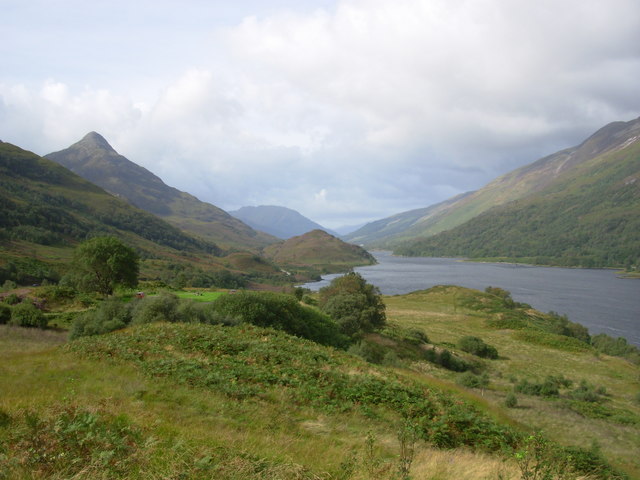
The demographic consequences of the Seven Ill Years were stark. Migration within Scotland intensified, with many seeking respite in the more fertile lowlands or urban areas, but others sought to escape entirely. Estimates suggest that tens of thousands of Scots, driven by the famine, left for Ireland and the Americas during this period. Perthshire, with its proximity to both the Highlands and Lowlands, became a key site of both internal displacement and outward migration. The long-term population loss during this period reshaped the region’s social structure, with entire communities diminished or abandoned altogether as the rural exodus gathered pace.
Politically, the crises of the late 17th century galvanized calls for a more unified and robust governance structure. The famine’s devastation became a rallying cry for those who sought a political union with England, a union that was realized just a few years after the Seven Ill Years had ended. The economic instability caused by the famine, combined with the collapse of ventures such as the Darien Scheme, underscored the need for stronger political and economic ties to counter Scotland’s vulnerability to international market forces and environmental disasters.

Yet, in the wake of this catastrophe, there were also significant shifts in agricultural practices. The famine had laid bare the inefficiencies and vulnerabilities of Scotland’s agrarian system, and the early 18th century saw a gradual move toward agricultural improvement. Landowners in Perthshire, as elsewhere, began to adopt new methods of cultivation and land management, spurred by the lessons learned from the famine years. The introduction of crop rotation, the enclosure of land, and the cultivation of new crops such as turnips and cabbages helped to stabilize food production. The Society of Improvers in the Knowledge of Agriculture, founded in 1723, became instrumental in promoting these changes, which would eventually lead to a more resilient agricultural economy in Perthshire and beyond.
The Seven Ill Years left a profound legacy on Scotland, reshaping not only its economy and society but also its political trajectory. For Perthshire, the famine underscored the fragility of its rural communities and their dependence on agriculture, while also setting the stage for the agrarian reforms of the 18th century that would help the region recover. The human cost of this period, however, remained a painful memory for generations, etched into the fabric of Scottish history as a time of immense suffering and transformative change.
This primer was prepared with the assistance of AI
References and Further Reading
Cullen, Karen J. Famine in Scotland: The ‘Ill Years’ of the 1690s. Edinburgh: Edinburgh University Press, 2010.
Devine, T. M. Clearance and Improvement: Land, Power and People in Scotland, 1700-1900. Edinburgh: John Donald, 2006.
Dingwall, Helen M. Late Seventeenth-Century Edinburgh: A Demographic Study. Aldershot: Scolar Press, 1994.
Dodgshon, Robert A. Land and Society in Early Scotland. Oxford: Clarendon Press, 1981.
Fenton, Alexander. Scottish Country Life. Edinburgh: John Donald, 1976.
Flinn, Michael, ed. Scottish Population History from the 17th Century to the 1930s. Cambridge: Cambridge University Press, 1977.
Gibson, A. J. S., and T. C. Smout. Prices, Food and Wages in Scotland, 1550-1780. Cambridge: Cambridge University Press, 1995.
Leneman, Leah. “Patronage and Power: The Role of the Atholl Family in Perthshire Politics, 1707-1767.” Scottish Historical Review 70, no. 190 (1991): 171-187.
Mitchison, Rosalind. The Old Poor Law in Scotland: The Experience of Poverty, 1574-1845. Edinburgh: Edinburgh University Press, 2000.
Sanderson, Margaret H. B. Scottish Rural Society in the Sixteenth Century. Edinburgh: John Donald, 1982.
Smout, T. C., Alan R. MacDonald, and Fiona Watson. A History of the Native Woodlands of Scotland, 1500-1920. Edinburgh: Edinburgh University Press, 2005.
Whatley, Christopher A. “The Experience of Work.” In The Transformation of Scotland: The Economy Since 1700, edited by T. M. Devine, C. H. Lee, and G. C. Peden, 227-251. Edinburgh: Edinburgh University Press, 2005.
Whyte, Ian D. Agriculture and Society in Seventeenth-Century Scotland. Edinburgh: John Donald, 1979.
Whyte, Ian D. Scotland Before the Industrial Revolution: An Economic and Social History, c.1050-c.1750. London: Longman, 1995.
Whyte, Ian, and Kathleen Whyte. The Changing Scottish Landscape, 1500-1800. London: Routledge, 1991.
 aletheus; a compendium
I value your thoughts and opinions; please share them here.