Avalokiteśvara, the bodhisattva of compassion, stands as a central figure in the Mahayana Buddhist tradition, embodying the universal ideal of mercy and the aspiration to alleviate the suffering of all sentient beings. This revered deity, whose name in Sanskrit translates to “Lord who gazes down,” originated in the early Mahayana texts of India, where the foundations of his cult were laid in seminal scriptures such as the Lotus Sutra and the Karandavyuha Sutra. These texts, instrumental in the spread of Mahayana Buddhism across Asia, established Avalokiteśvara’s role as a compassionate intercessor for all who suffer.

As Mahayana Buddhism expanded beyond the Indian subcontinent, Avalokiteśvara’s presence grew more pronounced, adapting to local cultural contexts while maintaining the core essence of boundless compassion. In China, the bodhisattva became known as Guanyin, a figure who would eventually be depicted in increasingly feminine forms, emphasizing the nurturing aspects of compassion. This transformation reflects the dynamic nature of Buddhist iconography and its ability to resonate with diverse cultural sensibilities. The evolution continued as Buddhism spread to Japan, where Avalokiteśvara is venerated as Kannon, maintaining a significant presence in Zen and Pure Land traditions.
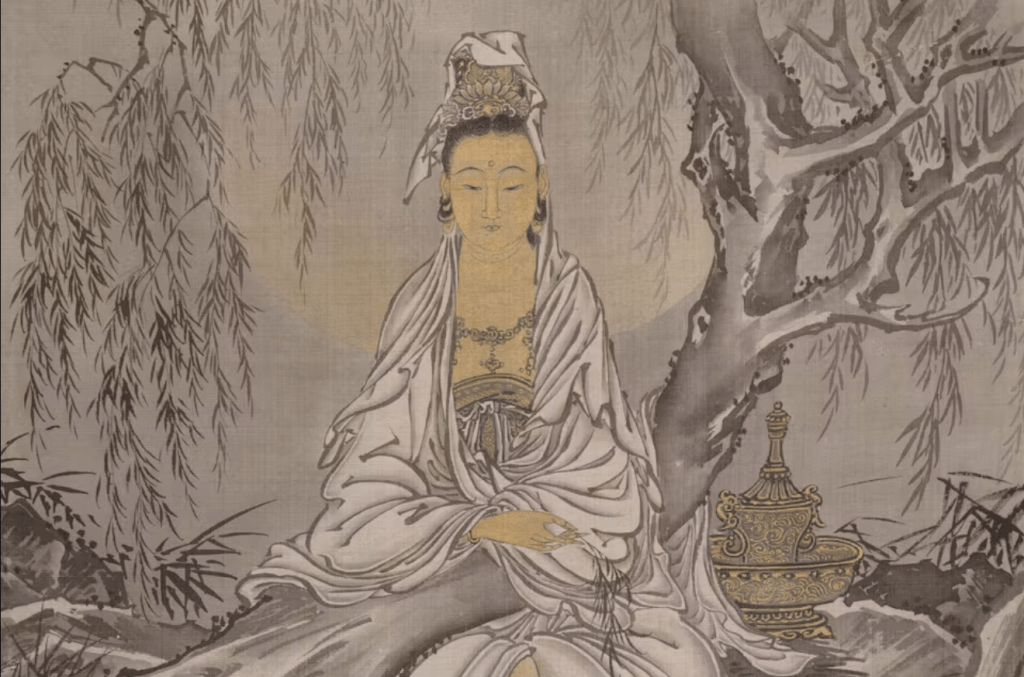
The bodhisattva’s influence extends throughout Southeast Asia, with localized names and forms emerging in countries such as Vietnam and Cambodia. In Nepal, Avalokiteśvara, also known as Karunamaya, occupies a unique position at the intersection of Buddhist and Hindu traditions, exemplifying the syncretistic tendencies of religious practice in the region. The Kathmandu Valley, in particular, serves as a testament to Avalokiteśvara’s enduring significance, with numerous depictions and rituals dedicated to the bodhisattva, including the vibrant Rato Machhindranath festival.
While the name Avalokiteśvara remains prominent in these broader Mahayana contexts, particularly in formal religious texts and scholarly discourse, it is in Tibet that the bodhisattva undergoes perhaps its most profound transformation. Known as Chenrezig in Tibetan, Avalokiteśvara becomes not just a figure of devotion but a cornerstone of national and spiritual identity. The Dalai Lamas, revered as emanations of Chenrezig, embody this connection between the compassionate bodhisattva and the Tibetan people.
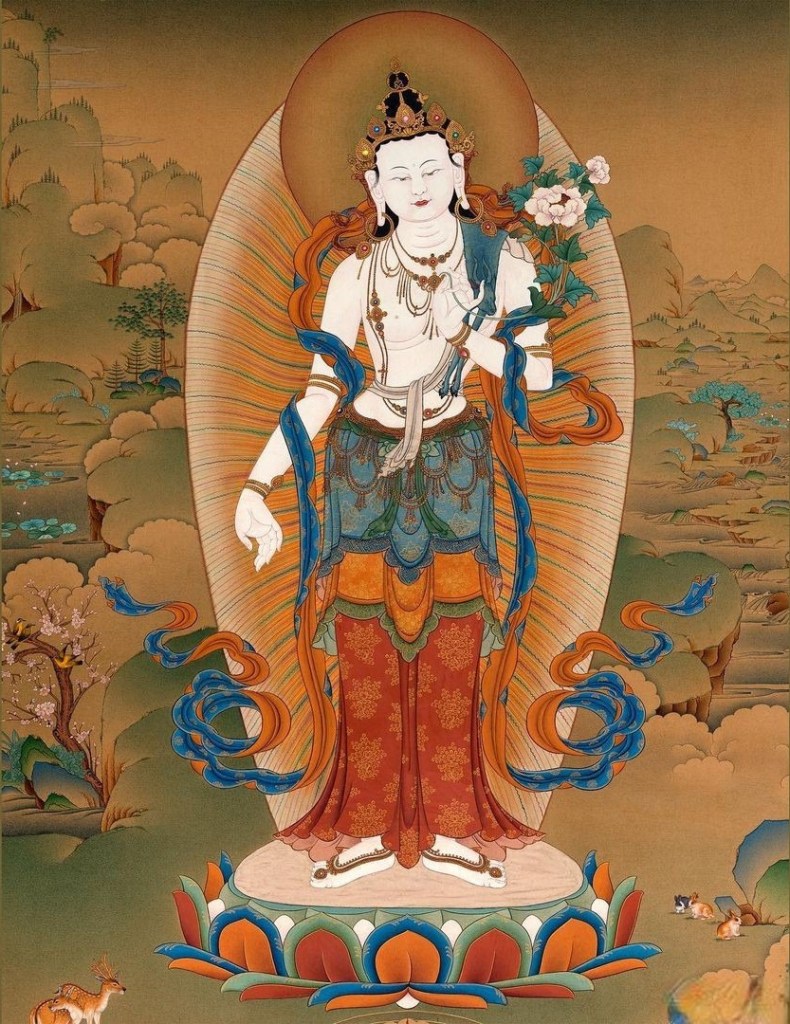
In Tibetan Buddhist practice, Chenrezig is often depicted with multiple arms and eyes, a vivid representation of the bodhisattva’s ability to perceive and respond to the myriad forms of suffering throughout the six realms of existence. This iconography, rich in symbolism, serves as a focal point for meditation and visualization practices aimed at cultivating compassion and bodhicitta—the altruistic intention to achieve enlightenment for the benefit of all beings.
The duality of Avalokiteśvara’s identity—as both the Sanskrit Avalokiteśvara and the Tibetan Chenrezig—reflects the complex interplay between classical Indian Buddhist traditions and their Tibetan interpretations. In formal Tibetan texts, commentaries, and rituals, particularly those with direct lineages to Indian sources, the Sanskrit name Avalokiteśvara continues to appear, maintaining a bridge to the bodhisattva’s origins in Mahayana sutras.
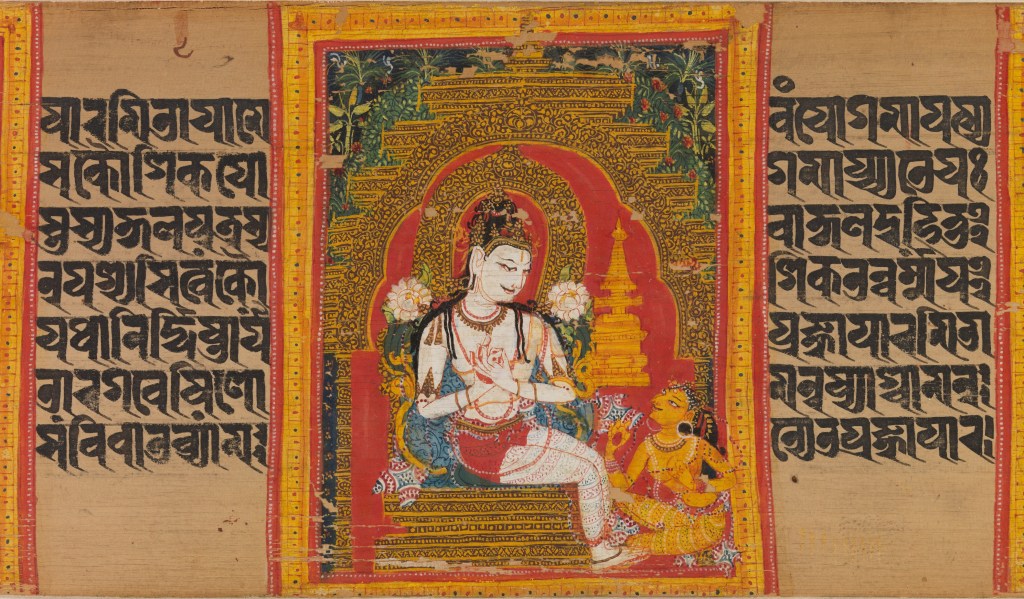
This linguistic and conceptual duality extends into contemporary Western Buddhist communities, where practitioners engaging with classical Mahayana or Vajrayana teachings may encounter both names. In academic and scriptural discussions, the name Avalokiteśvara often takes precedence, especially when referencing Indian or Sanskrit sources. However, in practice-oriented contexts, particularly those influenced by Tibetan traditions, Chenrezig remains the preferred appellation.
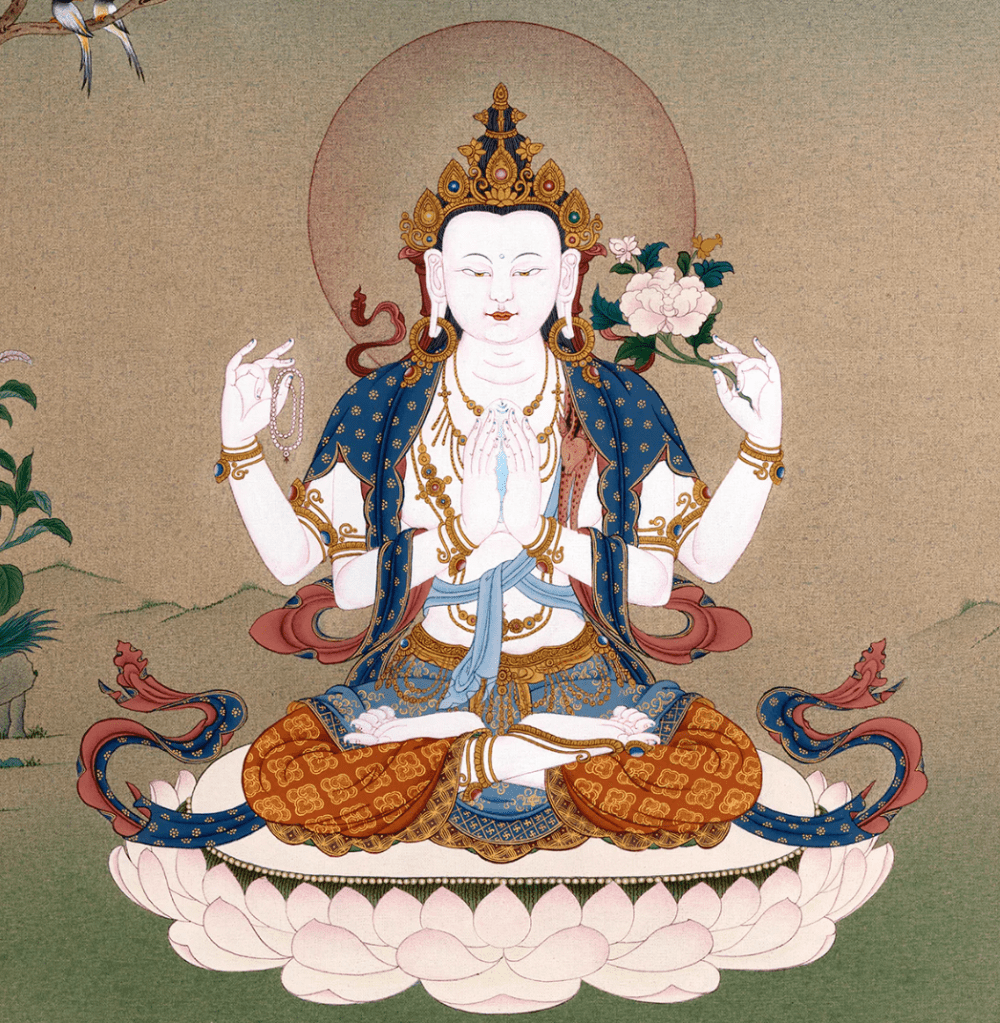
The enduring popularity of Avalokiteśvara across diverse Buddhist cultures speaks to the universal appeal of compassion as a spiritual ideal. From the earliest Indian texts to contemporary global Buddhist practices, the bodhisattva of compassion continues to inspire devotees, embodying the Mahayana ideal of the enlightened being who chooses to remain in the world to assist all sentient beings. Whether invoked as Avalokiteśvara, Chenrezig, Guanyin, or Kannon, this bodhisattva represents the boundless capacity for empathy and the tireless commitment to alleviating suffering that lies at the heart of Mahayana Buddhist philosophy and practice.
This article was created with the assistance of AI
 aletheus; a compendium
I value your thoughts and opinions; please share them here.