In 1830, as our ancestors navigated their daily lives, the world around them teetered on the edge of monumental change. From the green fields of Northern Ireland to the smoky streets of Dundee, from the restless German states to the windswept coasts of Zeeland, a new era was dawning – one that would reshape nations and redefine the fates of ordinary people.
Ireland: A Cauldron of Discontent
In Northern Ireland, the air crackled with tension. Tenant farmers, their backs bent under the weight of rising rents and oppressive tithes, cast wary glances at their Protestant neighbors. The Great Hunger was still a specter of the future, but its shadows already loomed in the ubiquitous potato fields. In towns like Maghera, the annual Orange Order parades served as flashpoints, igniting long-simmering sectarian conflicts.
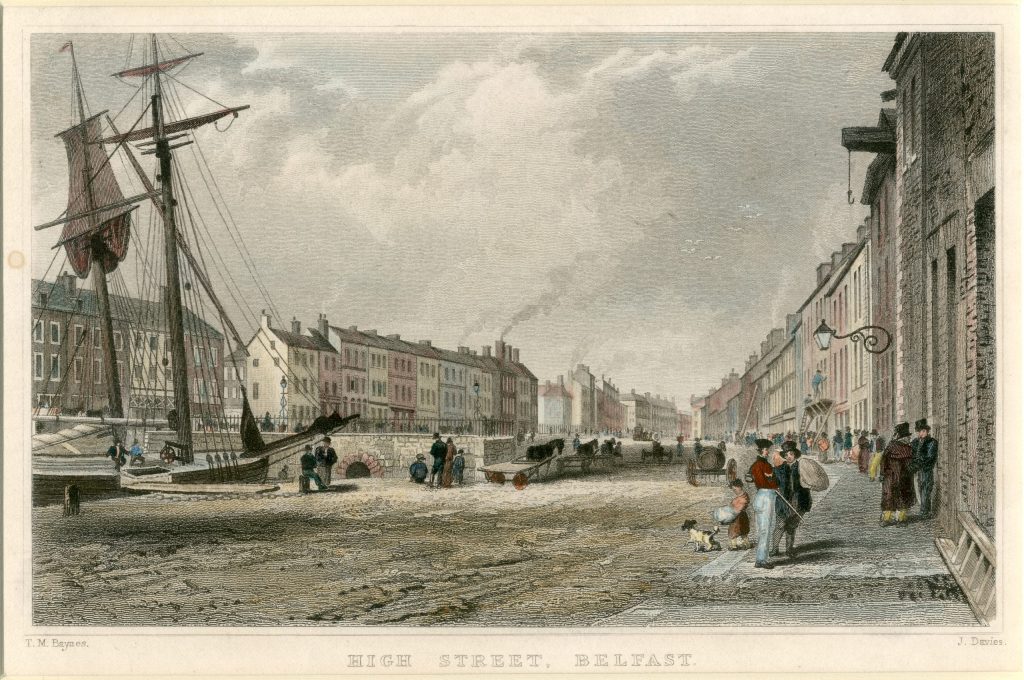
In 1831 the population of nearly 53,000 was almost three times what it had been 30 years before.
As cholera became established in Scotland, the Irish poor flowed back home, their repatriation supported by the authorities in Glasgow. Boarding coal vessels in Portpatrick, where quarantine regulations did not apply, they alighted at Donaghadee and Bangor and walked into Belfast. The first cases of cholera in the town can all be linked to travellers from Scotland or contact between individuals.
Daniel O’Connell, the great Irish statesman, captured the zeitgeist with chilling accuracy: “The state of Irish society may be compared to a seething cauldron, in which all the elements of strife and disorder are bubbling and boiling.”
Scotland: The Crucible of Industry
Across the Irish Sea, Dundee pulsed with the rhythms of a new age. The city’s transformation into a textile powerhouse had begun, the air thick with the acrid scent of progress and the clamor of machinery. Yet for many, this brave new world offered little more than grueling labor and meager wages.

https://www.bulldozia.com/douglass-in-scotland/speaking-engagements/dundee-30-january-1846/
As one contemporary observer noted, “The expansion of the mills has brought many to the city, but wages are low, and the air thick with soot. The working men and women toil long hours, and the streets are filled with smoke and poverty.”
Germany: Winds of Change
In the patchwork of German states, discontent simmered beneath the surface. Hesse-Kassel and Bavaria felt the tremors of nearby revolutions, with calls for reform growing louder by the day. Farmers and laborers alike struggled against economic headwinds, their frustrations finding voice in protests over the price of life’s most basic necessities.
“Das Volk will Brot und Spiele,” (The people want bread and games) – words attributed to Ludwig I of Bavaria, encapsulating the growing unrest with stark simplicity.
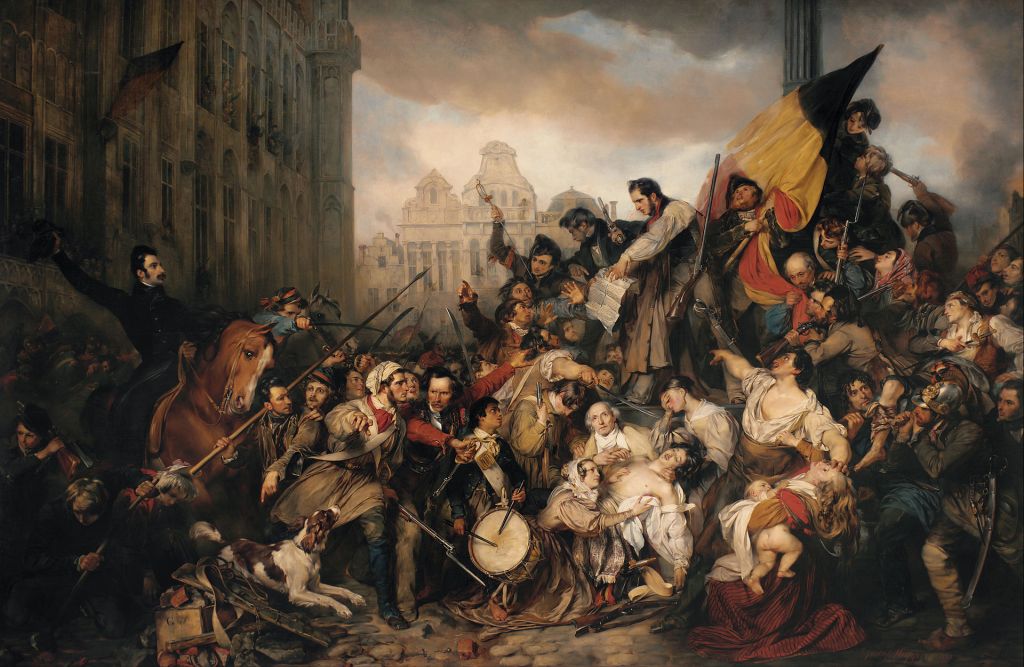
Zeeland: Between Tradition and Turmoil
The Dutch province of Zeeland, while seemingly insulated from the tumult, felt ripples of change. The Belgian Revolution disrupted trade, while religious dissent in the form of the Seceder movement challenged the established order. Yet amidst the uncertainty, innovation took root in the region’s fertile soil, as farmers experimented with new techniques to coax bounty from the sea-clay earth.
A New World Beckons
As Europe grappled with scarcity and unrest, across the Atlantic, a different story unfolded. The Erie Canal, a marvel of engineering, carved a path of prosperity through the heart of New York. Governor DeWitt Clinton’s words rang with pride and promise: “The Erie Canal is a work of which any nation might be proud… It has conferred upon the State of New York a prosperity unexampled in the history of nations.”
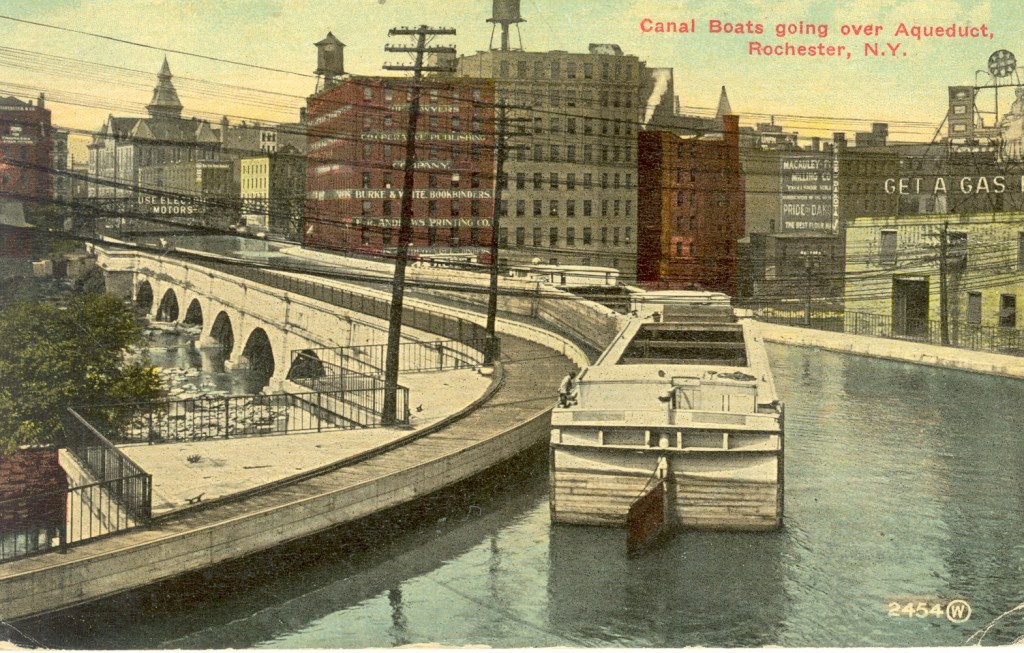
Photo courtesy, Erie Canal Museum
For our ancestors, such tales of abundance must have seemed like distant dreams. Yet the choices they would make in the coming years – to persevere, to rebel, or to seek new horizons – would echo through generations, weaving their personal stories into the grand tapestry of history.
As 1830 drew to a close, the stage was set for a decade of transformation. The world our ancestors’ families knew stood on the precipice of change, poised to leap into an uncertain but irresistible future. Sound familiar?
Cover image: Kerkhoff, Maurits van den (1830 – 1908, Dutch landscape painter), (1830 – 1908, Dutch landscape painter), “Gracht mit Mühle im Winter”, oil on wood, signed lower right M.v.D. Kerkhoff, 33 x 48 cm
 aletheus; a compendium
I value your thoughts and opinions; please share them here.